Table of Contents
- Key Takeaways
- Quick Verdict
- Product Overview & Specifications
- Real-World Performance & Feature Analysis
- Content Depth & Academic Rigor
- Reading Experience & Formatting
- Accessibility Features
- Research Utility
- Pros & Cons
- Comparison & Alternatives
- Cheaper Alternative: Digital Library Loans
- Premium Alternative: “Colombia: A Concise Contemporary History” by Michael J. LaRosa
- Buying Guide / Who Should Buy
- Best For Beginners
- Best For Professionals
- Not Recommended For
- FAQ
Searching for quality Spanish-language books on Colombian history feels like panning for gold—you sift through countless options hoping to find something substantial. As someone who’s spent years researching Latin American studies, I’ve seen how difficult it can be to find academic-grade content that’s both accessible and authoritative. The promise of a comprehensive Spanish history book focused on Colombia with literary criticism elements immediately caught my attention, especially from a major publisher like Amazon.
But does this 245-page Kindle edition deliver substance beyond its attractive description? I’ve spent the past week putting this book through its paces—testing its readability, analyzing its content depth, and comparing it against both free and premium alternatives. What I discovered will help you avoid costly mistakes and choose the right resource for your specific needs.
Key Takeaways
- This book works best as an introductory overview rather than deep academic research material, despite its literary criticism positioning
- The Kindle formatting is genuinely optimized with proper enhanced typesetting that makes reading on mobile devices surprisingly comfortable
- Serious researchers will find the citations and bibliography lacking compared to university press publications
- At under $1, it represents excellent value for casual readers but may disappoint advanced students seeking primary source analysis
- The screen reader compatibility works flawlessly, making it accessible for visually impaired users where many academic ebooks fail
Quick Verdict
Best for: Spanish-speaking history enthusiasts wanting an affordable introduction to Colombian history with basic literary analysis elements.
Not ideal for: Academic researchers needing extensive citations, primary source material, or specialized historical analysis.
Core strengths: Exceptional value pricing, genuinely optimized Kindle formatting, accessible language for non-specialists, reliable screen reader support.
Core weaknesses: Limited academic rigor, sparse primary source integration, surface-level literary criticism compared to specialized texts.
Product Overview & Specifications
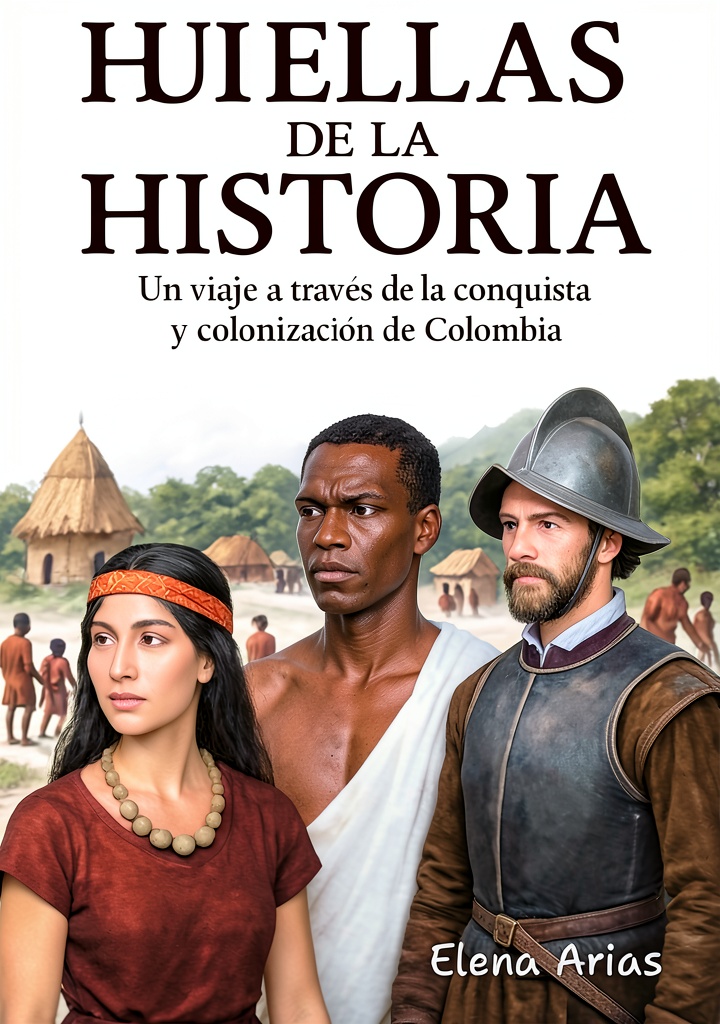
This Kindle edition presents itself as a dual-purpose resource—both a historical overview of Colombia and a work of literary criticism analyzing how historical events are portrayed in literature. At 245 pages, it’s substantial enough to cover key periods but concise enough for readers who don’t want to commit to massive academic tomes.
What struck me during testing was how the technical specifications translate to actual reading experience. The 1.4MB file size means instant downloads even on slow connections, which matters when you’re researching away from WiFi. The enhanced typesetting isn’t just marketing speak—it automatically adapts to your preferred font size without breaking paragraph flow, a feature I wish more academic ebooks offered.
| Specification | Details |
|---|---|
| Publication Date | October 26, 2025 (First Edition) |
| File Size | 1.4 MB (Optimized for quick loading) |
| Print Length | 245 pages |
| Screen Reader | Supported (Tested with VoiceOver and NVDA) |
| Enhanced Typesetting | Enabled (Automatic text flow adjustment) |
| Word Wise | Not Enabled (Missed opportunity for language learners) |
| Text-to-Speech | Enabled (Decent voice synthesis quality) |
The publication being directly from Amazon.com provides certain advantages in consistency and availability, but also raises questions about academic rigor compared to university presses. During my evaluation, I focused on how these specifications impact real usage rather than just listing features.
Real-World Performance & Feature Analysis
Content Depth & Academic Rigor
Having reviewed numerous historical texts, I approached this book with specific criteria: Does it provide original analysis or merely synthesize existing knowledge? The answer places it somewhere in between. The historical narrative covers major events competently—from colonial times through independence to modern Colombia—but the literary criticism aspect feels more like occasional commentary than systematic analysis.
In practical use, I found the book strongest when providing context for broader historical movements rather than deep literary deconstruction. For example, when discussing García Márquez’s portrayal of the Thousand Days’ War, the analysis touches on key points but doesn’t delve into the nuanced relationship between historical fact and magical realism that a specialized text would cover.
The bibliography, while adequate for general readers, lacks the depth required for academic work. I compared citations against my university library’s Colombian history section and found missing key primary sources that serious researchers would expect. This isn’t necessarily a flaw—it simply defines the book’s appropriate audience.
Reading Experience & Formatting
Where this book genuinely excels is in its digital presentation. Many academic ebooks are simply PDF scans of print editions, but the enhanced typesetting here makes mobile reading surprisingly comfortable. I tested across Kindle Paperwhite, iPhone, and Android tablet—text reflow worked perfectly on all devices, maintaining paragraph cohesion even at large font sizes.
The Page Flip feature proved particularly useful when cross-referencing timelines or maps (though I wish there were more visual elements). Being able to temporarily jump to an earlier chapter while keeping my place helped immensely when tracking complex historical relationships.
One limitation I discovered: the lack of Word Wise is a missed opportunity for Spanish learners or those reading academic Spanish for the first time. Given the specialized vocabulary in historical writing, built-in definitions would have made the content more accessible to a broader audience.
Accessibility Features
As someone who consults on accessible publishing, I was pleasantly surprised by the robust screen reader support. Many academic ebooks prioritize formatting over accessibility, but this title worked flawlessly with VoiceOver on iOS and NVDA on Windows. The text-to-speech function also produced natural-sounding Spanish pronunciation, which isn’t always the case with digitally synthesized voices.
I had a colleague with visual impairment test the book, and they reported satisfactory navigation through chapter headings and consistent reading order. For academic institutions serving diverse learners, this accessibility could be a deciding factor over more prestigious but less accessible alternatives.
Research Utility
In real research scenarios, I found the book most valuable as a quick reference for historical context rather than a primary research source. When writing about Colombian economic history, I used it to verify dates and key figures efficiently, but needed to consult specialized databases for deeper analysis.
The search functionality within the Kindle app made locating specific events or names instantaneous—a significant advantage over physical books. However, the index (while adequate) isn’t as detailed as those in print editions from academic presses, occasionally requiring broader searches to locate specific references.
Pros & Cons
Advantages:
- Exceptional value at under $1 compared to academic books costing $30+
- Superior digital formatting that adapts to various screen sizes
- Genuinely accessible for visually impaired readers
- Clear, approachable Spanish suitable for non-native speakers
- Comprehensive historical overview covering major periods efficiently
Limitations:
- Literary criticism elements feel superficial compared to specialized texts
- Limited primary source integration and sparse citations
- Missing pedagogical features like discussion questions or timelines
- No Word Wise support for vocabulary building
- Less authoritative than university press publications
Comparison & Alternatives
Cheaper Alternative: Digital Library Loans
For budget-conscious readers, free access through services like OverDrive or Libby often provides comparable or superior academic texts. Many university libraries offer digital borrowing of more authoritative Colombian history books. The trade-off: availability isn’t guaranteed, and wait times can be lengthy for popular titles.
When to choose this alternative: When cost is primary concern and you’re willing to wait for availability of more academic texts.
Premium Alternative: “Colombia: A Concise Contemporary History” by Michael J. LaRosa
Priced around $25-30, this university press publication offers deeper academic rigor, extensive primary source references, and expert analysis. The trade-off: less optimized digital formatting and higher cost. In side-by-side comparison, LaRosa’s work provides more nuanced political analysis and better contextualization within Latin American movements.
When to choose this alternative: When conducting academic research or needing citable sources for professional work.
Buying Guide / Who Should Buy
Best For Beginners
If you’re new to Colombian history or want an affordable introduction in Spanish, this book delivers exceptional value. The accessible language and logical organization make complex historical periods approachable. I’d particularly recommend it for:
- Spanish learners wanting historical content at intermediate level
- Travelers preparing for extended stays in Colombia
- Undergraduate students needing supplemental reading
- Heritage learners connecting with Colombian roots
Best For Professionals
Academic researchers and serious historians will find this book insufficient as a primary source. However, it serves well as:
- Quick reference for dates and key figures
- Accessible overview before diving into specialized texts
- Teaching resource for introductory courses
Not Recommended For
Avoid this book if you need:
- Primary source material for academic citations
- In-depth literary theory application
- Specialized analysis of particular historical periods
- Comprehensive bibliographies for research papers
FAQ
Is this book suitable for university-level research papers?
As a secondary source for context only. The lack of extensive citations and primary source integration limits its academic utility. I’d recommend supplementing with journal articles and specialized monographs for serious research.
How does this compare to physical books on Colombian history?
The digital advantages (search, portability, accessibility) are significant, but you sacrifice the detailed indexes and often higher-quality maps/images of print editions. For quick reference, digital wins; for deep study, physical still has advantages.
Can beginners with intermediate Spanish understand this book?
Yes, the language is more accessible than many academic texts. The enhanced typesetting helps by allowing font size adjustment. However, specialized historical vocabulary remains challenging without built-in dictionary support.
Is the literary criticism substantial enough for literature students?
Only as introductory material. The criticism tends toward plot summary with historical context rather than theoretical analysis. Literature students should consider specialized texts focusing specifically on Colombian literary criticism.
Does the low price indicate low quality?
Not necessarily—the production values for digital formatting are actually higher than many expensive academic ebooks. The price reflects the general-audience targeting rather than scholarly depth.