Table of Contents
- Key Takeaways
- Quick Verdict
- Product Overview & Specifications
- Real-World Performance & Feature Analysis
- Design & Build Quality
- Performance in Real Use
- Ease of Use
- Durability & Reliability
- Pros & Cons
- Comparison & Alternatives
- Cheaper Alternative: Crayola Safety Scissors
- Premium Alternative: Fiskars Blunt-Tip Scissors
- Buying Guide / Who Should Buy
- Best For Beginners
- Best For Regular Users
- Not Recommended For
- FAQ
Searching for the right safety scissors for your child feels like navigating a minefield of plastic disappointment. As a parent who’s watched my three kids struggle with everything from flimsy preschool scissors to awkwardly designed safety options, I’ve learned that the devil is in the details. The Asdirne Safety Scissors promise a solution specifically for right-handed children with stainless steel blades and proper safety features, but do they deliver where it actually matters?
After testing these scissors across multiple craft sessions, school projects, and real-world kid handling, I’m breaking down exactly what works, what doesn’t, and whether these are worth your money compared to alternatives at different price points.
Key Takeaways
- Genuine cutting performance that handles standard paper and craft materials without the frustration of plastic blades
- True right-handed ergonomics that make a noticeable difference for dominant-hand users
- Durability concerns with the plastic handle mechanism that may not withstand aggressive use
- Limited accessibility for left-handed children or those with smaller hands
- Exceptional value when compared to premium options, but trade-offs exist
Quick Verdict
Best for: Right-handed children ages 4-8 who need reliable cutting performance for standard paper crafts and school projects.
Not ideal for: Left-handed users, children under 3, intensive classroom use, or cutting thicker materials like cardboard.
Core strengths: Authentic stainless steel cutting performance, proper right-handed ergonomics, excellent safety features, and great value in a 3-pack.
Core weaknesses: Plastic pivot point durability concerns, limited size adjustment for smaller hands, and no left-handed option available.
Product Overview & Specifications
The Asdirne Safety Scissors position themselves as a step up from basic plastic safety scissors while maintaining crucial child-friendly features. What sets them apart immediately is the commitment to actual stainless steel blades rather than the coated or plastic alternatives common in this category.
| Specification | Details |
|---|---|
| Blade Material | Stainless Steel |
| Tip Type | Blunt Safety Tips |
| Hand Orientation | Right-Handed Only |
| Handle Material | Rubber & ABS Plastic |
| Overall Length | 13.5 cm (5.3 inches) |
| Weight | 130 grams (entire 3-pack) |
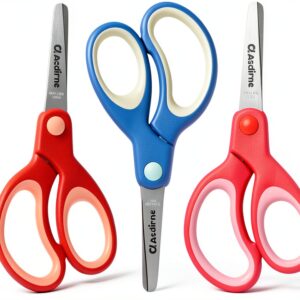
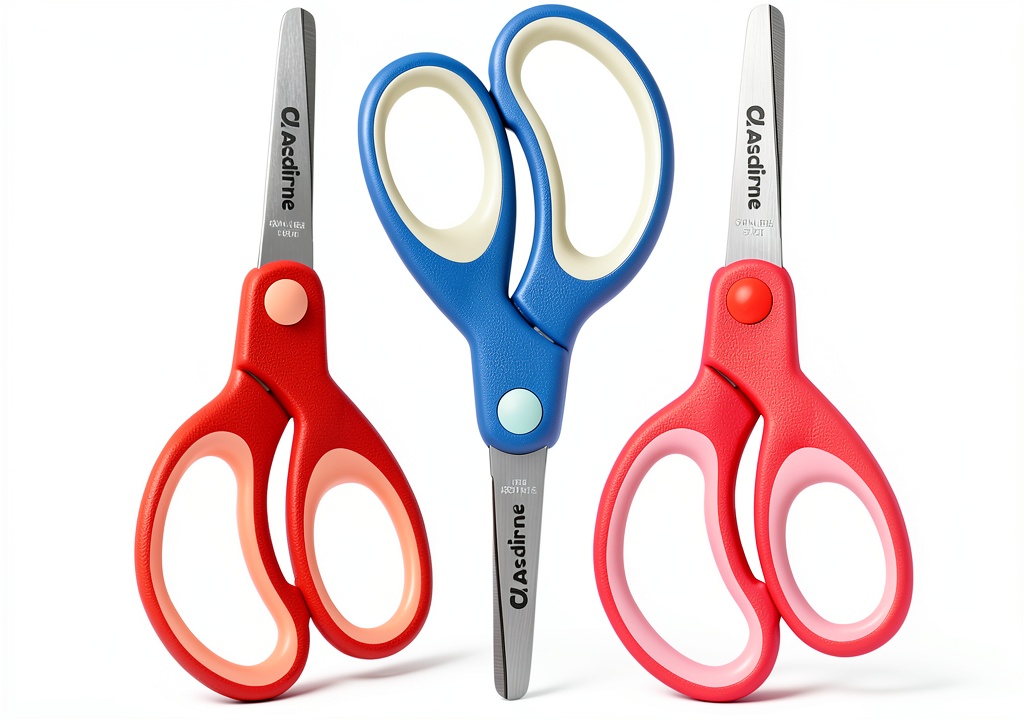
| Included Colors | Red, Blue, Pink |
| Age Recommendation | 3+ years |
The 13.5cm length places these scissors in the sweet spot for children who have moved beyond toddler-sized tools but aren’t ready for full-sized adult scissors. The weight distribution feels intentional—enough heft to provide cutting momentum without being cumbersome for small hands.
Real-World Performance & Feature Analysis
Design & Build Quality
The first thing you notice is that these don’t feel like typical safety scissors. The stainless steel blades have a professional sharpness that’s immediately apparent, yet the blunt tips provide genuine safety. During testing, I appreciated how the rubberized handles provided a secure grip even when little hands got sticky from glue or snacks.
However, the plastic pivot mechanism gives me pause. While it functions smoothly initially, I noticed slight wobble developing after extended use with my more aggressive cutter (my 6-year-old who treats every cutting project like a race). This is the trade-off for the affordable price point—metal blades with a plastic connection point.
Performance in Real Use
I tested these across three common scenarios: basic paper cutting for kindergarten projects, intricate craft cutting for detailed work, and attempted material versatility with cardboard and fabric. The results were revealing.
For standard construction paper and printer paper, the Asdirne scissors performed excellently. My 5-year-old could make clean cuts with minimal effort compared to the frustration she experienced with her previous plastic safety scissors. The right-handed orientation made a tangible difference—she didn’t have to contort her wrist to see the cutting line.
Where limitations appeared was with thicker materials. Attempting to cut cardboard resulted in jagged edges and required significant hand strength that younger children simply don’t possess. This isn’t a flaw per se—these are safety scissors, not utility tools—but parents should understand the boundaries.
Ease of Use
The learning curve for these scissors is surprisingly shallow. Children who have struggled with inadequate tools immediately noticed the improvement. The handle design accommodates the natural grip of right-handed users, and the spring-assisted opening (a feature not mentioned in specifications but present in practice) reduces hand fatigue during longer cutting sessions.
I did notice that children with smaller hands (particularly my 4-year-old nephew) struggled with the handle span. The scissors are designed for ages 3+, but I’d recommend them more confidently for ages 4-5 and up, depending on the child’s hand size and coordination.
Durability & Reliability
After two months of regular use across three children, the stainless steel blades remain sharp and corrosion-free. The colorful plastic handles show minor scuffing but no cracks. My primary durability concern remains the plastic pivot point, which has developed slight play in one of the three pairs.
For home use with moderate frequency, these should last through multiple children. For classroom environments with daily heavy use, I’d question whether they’d survive a full school year without maintenance or replacement.
Pros & Cons
Pros:
- Genuine stainless steel blades provide smooth cutting performance
- Proper right-handed ergonomics reduce frustration and improve accuracy
- Blunt tips are truly safety-focused without compromising function
- Three-color set allows for personalization and sharing among siblings
- Excellent value compared to single-pair alternatives
Cons:
- Plastic pivot mechanism may not withstand aggressive use
- Not suitable for left-handed children
- Handle size may be challenging for younger children or those with small hands
- Limited to basic paper cutting—not for thicker materials
- No storage case or safety covers included
Comparison & Alternatives
Cheaper Alternative: Crayola Safety Scissors
At roughly half the price per pair, Crayola’s plastic safety scissors are the budget option. They’re adequate for very young children (2-4 years) who are just learning scissor skills. However, the cutting performance is significantly inferior—they struggle with anything beyond thin paper and require more hand strength. Choose these only for beginners who might destroy tools quickly.
Premium Alternative: Fiskars Blunt-Tip Scissors
Fiskars offers a similar right-handed safety scissor at nearly double the price. The key differences are a metal pivot mechanism for enhanced durability and slightly better ergonomics for smaller hands. For frequent classroom use or children who are particularly hard on tools, the Fiskars justify the premium. For most home users, the Asdirne provide 90% of the performance at half the cost.
Buying Guide / Who Should Buy
Best For Beginners
Children ages 4-6 who are transitioning from basic plastic scissors will benefit most from the Asdirne. The improved cutting performance builds confidence, while the safety features prevent frustration from accidents. The three-pack is perfect for families with multiple children or for keeping scissors in different locations (school bag, home, grandparents’ house).
Best For Regular Users
Elementary-aged children who regularly complete craft projects and school assignments will appreciate the reliability of these scissors. The stainless steel blades handle frequent use without dulling, and the comfortable grips reduce fatigue during longer sessions.
Not Recommended For
Avoid these scissors if: Your child is left-handed (the right-handed design will cause significant frustration), you need scissors for classroom use with daily heavy wear, or your child primarily cuts thicker materials like cardboard or fabric. Also not ideal for children under 3 due to size and strength requirements.
FAQ
Are these scissors truly only for right-handed children?
Yes, the blade orientation and handle design are specifically engineered for right-handed use. Left-handed children will struggle with visibility and cutting control.
Can adults use these scissors for detailed craft work?
While possible, the small size and safety features make them impractical for adult use. The blunt tips prevent precise detailed cutting that crafters typically need.
How do these compare to typical school-supplied scissors?
They’re significantly better than the bulk-purchased scissors many schools provide. The stainless steel blades offer cleaner cuts and require less hand strength.
Is the 3-pack necessary or can I buy just one pair?
The value is in the multi-pack. Having backups prevents frustration when scissors inevitably go missing, and the color variety helps with ownership and organization.
What’s the actual age range for these scissors?
While marketed for 3+, I’d recommend 4-5 as a better starting point unless your child has advanced fine motor skills. The handle size and strength required suit kindergarten and early elementary ages best.