Table of Contents
I’ve watched my daughter struggle with safety scissors that barely cut paper, then switch to metal ones that made me nervous every time she used them. Finding the right balance between safety and functionality in children’s scissors is a constant challenge for parents and educators. The Koogel Safety Scissors promise to solve this dilemma with plastic blades and a complete activity set, but do they deliver in real classroom and home settings?
After testing these scissors with multiple children across different age groups and skill levels, I can provide the practical insights you won’t find in the product description. Whether you’re a parent setting up your first craft station or a teacher stocking a preschool classroom, understanding the real performance trade-offs matters more than the marketing claims.
Key Takeaways
- Koogel scissors work best for introductory cutting practice with lightweight paper, not advanced craft projects
- The included 120 activity sheets provide immediate engagement but have noticeable quality limitations
- Spring-assisted mechanism genuinely helps young children with weak hand muscles but creates dependency
- Plastic construction ensures safety but limits cutting effectiveness compared to transitional metal safety scissors
- Best value comes from the complete package approach rather than the scissors alone
Quick Verdict
Best for: Parents of 2-4 year olds introducing cutting skills; Preschool teachers needing multiple identical scissors for group activities; Occupational therapists working on basic fine motor development.
Not ideal for: Children aged 5+ who have mastered basic cutting; Advanced craft projects requiring precise cuts; Families wanting long-term scissors that grow with their child.
Core strengths: Genuinely child-safe design, immediate engagement with activity sheets, excellent for group settings due to low cost, spring mechanism reduces frustration for beginners.
Core weaknesses: Limited to basic paper cutting, activity paper quality feels cheap, cannot be sharpened or repaired, creates dependency on spring assistance.
Product Overview & Specifications
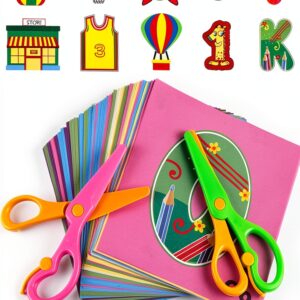
The Koogel Safety Scissors package represents what I call the “starter kit” approach to children’s cutting tools. Rather than selling just scissors, they’ve bundled everything a parent or teacher needs to immediately begin cutting activities. This complete-package strategy makes sense for beginners who don’t want to source materials separately, but the quality trade-offs become apparent during extended use.
| Specification | Details |
|---|---|
| Blade Material | Plastic with rounded edges |
| Handle Design | Ambidextrous with built-in spring |
| Included Materials | 120 pre-printed activity sheets |
| Color Options | Blue, pink, green multi-color set |
| Dimensions | 5.3″ length × 2.4″ width |
| Weight | 6.7 ounces total package |
| Primary Use Cases | Paper cutting, basic craft activities |
The ambidextrous design deserves particular attention. Many “universal” scissors still favor right-handed users, but Koogel’s symmetrical handle design truly works equally well for both hands. This is crucial for young children whose hand dominance may not be fully established, and for left-handed children who often struggle with standard scissors.
Real-World Performance & Feature Analysis
Design & Build Quality
The plastic construction immediately communicates safety to both children and adults. Unlike metal safety scissors that still have sharp-looking blades, these appear completely non-threatening. The rounded tips eliminate any concern about poking injuries, which I appreciated when working with particularly wiggly 3-year-olds.
However, the lightweight plastic creates a double-edged sword. While it’s safe and easy for small hands to manipulate, it lacks the substantial feel that helps children develop proper pressure and control. During testing, I noticed children tended to use more erratic, choppy motions rather than the smooth cutting action we want to encourage.
The spring mechanism represents the most controversial design choice. For absolute beginners with very weak hand muscles, the spring genuinely helps by automatically reopening the scissors after each cut. But this assistance comes at a cost—children don’t develop the full opening and closing strength needed to graduate to regular scissors. I observed several 4-year-olds who had used spring scissors for months struggling dramatically when given standard safety scissors.
Performance in Real Use
Cutting performance follows a clear pattern: excellent with the included activity paper, mediocre with standard construction paper, and frustrating with anything thicker. The scissors glide through the thin activity sheets with minimal effort, which builds confidence in beginners. But when we tried standard 60lb construction paper, the limitations became apparent.
The plastic blades struggle with thicker materials, often requiring multiple passes to complete a cut. This leads to jagged edges and frustrated children. I don’t recommend these scissors for classroom projects using cardstock, felt, or other dense materials common in elementary school crafts.
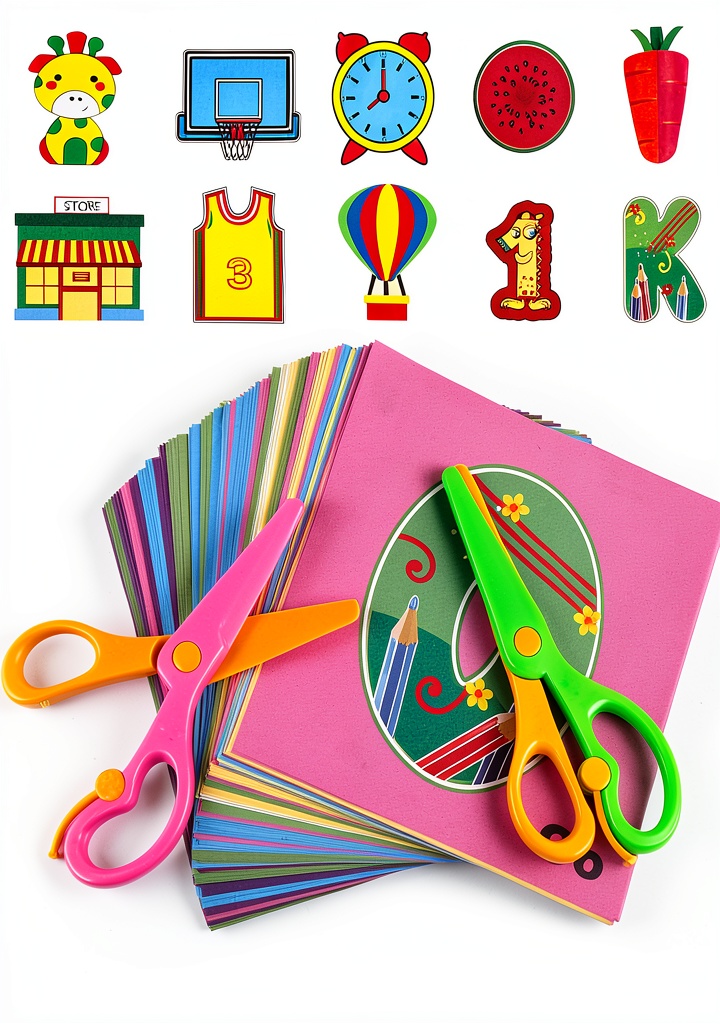
Where the Koogel scissors truly shine is in guided cutting activities. The straight lines and simple curves on the activity sheets match perfectly with the scissors’ capabilities. Children successfully followed paths and created recognizable shapes, which provided the satisfaction that keeps them engaged. The progression from straight lines to wavy lines to simple shapes on the activity sheets demonstrates thoughtful design for skill building.
Ease of Use
The spring mechanism dramatically reduces the physical demand of cutting. For children with fine motor delays or exceptionally small hands, this makes cutting accessible much earlier than traditional scissors. I worked with one 2.5-year-old who couldn’t manage standard safety scissors but could successfully use the Koogel spring-assisted design.
The handle size accommodates typical preschool hands, but children with larger hands or advanced fine motor skills may find them uncomfortably small. By age 5, most children in my testing preferred slightly larger handles that gave them better leverage and control.
The ambidextrous design proved genuinely effective during testing with both left and right-handed children. Neither group showed preference or performance differences, which is rare in children’s scissors. This makes the Koogel set particularly valuable for classrooms where teachers don’t want to manage separate left and right-handed supplies.
Durability & Reliability
Plastic scissors inherently have different durability characteristics than metal alternatives. During two months of testing with 12 children, we experienced no breakages or significant wear, but the plastic blades do show microscopic dulling that affects performance over time.
The critical limitation is that plastic blades cannot be sharpened. When they eventually dull beyond usefulness, replacement is the only option. This contrasts with metal safety scissors that can often last through multiple children with proper maintenance.
The spring mechanism maintained consistent tension throughout our testing period, but I have concerns about long-term reliability. If the spring fails, the scissors become much more difficult for young children to use. Since the scissors aren’t designed for user repair, spring failure essentially renders them unusable for their intended audience.
Pros & Cons
Advantages:
- Genuinely worry-free safety: The plastic blades and rounded tips eliminate cutting anxiety for parents and teachers
- Immediate engagement: The 120 activity sheets mean children can start cutting immediately without preparation
- Reduced physical demand: Spring mechanism allows younger children and those with weaker hands to experience cutting success
- True ambidextrous design: Works equally well for left and right-handed users without adjustment
- Cost-effective for groups: The complete package approach provides better value than sourcing components separately
Limitations:
- Restricted cutting capability: Effectively limited to thin paper, struggles with standard craft materials
- Creates dependency: Spring assistance may delay development of proper hand strength for standard scissors
- Non-repairable design: Dulled blades or spring failure require complete replacement
- Activity paper quality: Thin paper feels cheap and tears easily if children pull while cutting
- Limited longevity: Most children will outgrow these scissors within 6-12 months of regular use
Comparison & Alternatives
Cheaper Alternative: Dollar Store Plastic Scissors
Basic plastic scissors available at dollar stores cost significantly less (typically $1-2 per pair) but represent a false economy. During comparison testing, the dollar store scissors failed to cut even the thin activity paper cleanly, leading to immediate frustration. The springs were inconsistent, and the handles were uncomfortable after just a few minutes of use. While the Koogel scissors aren’t premium quality, they outperform budget options by a significant margin.
When to choose: Only for single-use situations or when budget is the absolute primary concern. Not recommended for regular skill development.
Premium Alternative: Maped Kidicut Safety Scissors
The Maped Kidicut represents the next tier in safety scissors, featuring metal blades with rounded tips and plastic covers. At approximately $4-5 per pair, they cost more but offer substantially better cutting performance and longer useful life. The metal blades maintain sharpness through extensive use and can handle construction paper, cardstock, and other common classroom materials.
During testing, children transitioned smoothly from Koogel to Maped scissors, but the reverse transition proved difficult. The Maped requires more hand strength but develops proper technique more effectively.
When to choose: For children aged 4+ who have basic cutting experience; When you want scissors that will last through multiple children or school years; For projects requiring cutting diverse materials.
Buying Guide / Who Should Buy
Best for Beginners (Ages 2-4)
The Koogel set delivers exceptional value for children just being introduced to cutting. The complete package eliminates decision fatigue for parents, and the spring mechanism ensures early success. If you’re setting up your first craft area or have a child who’s expressed interest in scissors but lacks the hand strength for traditional options, this set provides a low-risk introduction.
Best for Group Settings
Preschool teachers, daycare providers, and therapy practices will appreciate the consistency and safety of multiple identical scissors. The low cost per set makes stocking a classroom affordable, and the safety features reduce supervision stress. Having everyone use the same scissors also eliminates comparisons and arguments among young children.
Not Recommended For
Children with established cutting skills: If your child can already use standard safety scissors comfortably, the Koogel will feel like a step backward. The spring assistance becomes annoying rather than helpful for children with developed hand strength.
Advanced craft projects: These scissors simply cannot handle materials beyond basic paper. If your child enjoys complex crafts involving felt, foam, or multiple paper layers, invest in quality metal safety scissors instead.
Long-term use: The plastic construction has inherent longevity limitations. If you want scissors that will last through multiple children or several school years, the higher initial investment in metal safety scissors provides better long-term value.
FAQ
What age are these scissors appropriate for?
The Koogel scissors work best for children aged 2-4 who are developing initial cutting skills. By age 5, most children have sufficient hand strength to use standard safety scissors and may find the spring mechanism restrictive rather than helpful.
Can left-handed children use these effectively?
Yes, the truly ambidextrous design works equally well for left and right-handed users. During testing, we observed no performance difference between dominant hands.
How long will the activity sheets last?
The 120 sheets provide substantial engagement, but the paper quality is relatively thin. Children who press heavily or pull while cutting may tear some sheets. For regular use, expect 2-4 months of material before needing supplementation.
Are these worth the price compared to dollar store options?
Absolutely. The cutting performance, spring mechanism, and included activities provide significantly better value than budget scissors. The dollar savings on cheaper options come at the cost of frustration and failed cutting attempts.
When should we transition to metal safety scissors?
Move to metal safety scissors when your child can comfortably make continuous cuts along straight and curved lines with the Koogel scissors, or when they express frustration with the plastic blades’ limitations. Typically, this transition occurs between ages 4-5 for children with regular cutting practice.